Hey Alexa, Can You Keep A Secret?

The thought of having an Alexa sounds cool right? It basically is a glimpse of the technology we had imagined in the past. The ability to have a ‘personal assistant’ is so cool. From keeping you updated on news, to ask about the weather, to change the music you want to listen to, to reminders and plenty of more features! However, for all of you that wants to purchase an Alexa, before you jump onto the trend, you must understand that with every new technology innovated, there will always be negatives aspects that comes along with it.

Alexa

One major negative factor is: Privacy

Privacy is the right to be free from secret surveillance and the ability to determine how, when and to whom their personal information is to be revealed.

Companies like Google and Amazon have stated that they go through lengths to put protection on consumers privacy. However, there was a scary situation that occurred in last December that stated otherwise. This situation came about when a report mentioned that a customer in Germany requested Amazon about his personal activities and data collected from Alexa. The customer was given access to 1,700 audio recordings that he didn’t even know existed! Hearing this gives me the chills!

You’d also think that that that only people listening your conversation with Alexa would be simply the people around you. However, it turns out that conversations between you and Alexa, are being recorded and transcribed by the workers at Amazon. This is because it allows Alexa to learn more, recognise more commands and improves Alexa overall.

I bet you all are thinking, isn’t there an option to inhibit Amazon from using and transcribing the voice recordings? There are certainly options where you can turn off the feature. If you’re curious on how, you can turn it off by following these steps.

  1. Open the Alexa app on your phone.
  2. Tap the menu button on the top left of the screen.
  3. Select “Alexa Account.”
  4. Choose “Alexa Privacy.”
  5. Turn off the button next to “Help Develop New Features.”
  6. Turn off the button next to your name under “Use Messages to Improve Transcriptions.”
Alexa App

By turning off this feature you’d think it’ll stop Amazon from having the ability to observe all of your recordings, right? Well, you’re wrong. Amazon has stated that people who opt out of the program might still have their Alexa recordings analysed ‘by hand’. With using Alexa, it seems like you can never get the perfect type privacy that you have always wanted.

Upon these issues occurring, are you still willing to try these types of devices? Are you willing to trade snippets of your privacy in exchange for convenience?

Traditional Media vs New Media?

Over the past years, since the introduction of new media came about, I am pretty sure all of you have thought at least once, is traditional media going to die out? There are discussions all around the world about how new media is rising at a substantial rate where as the ‘old’ media can potentially be dying out due to its declining usage rates. 

What Is Traditional Media and New Media?

Traditional media are any types of mass communication that were used before new media came out. These types include television, radio, magazines and newspaper.
On the other hand, new media is a set of media communication using digital technologies such as the internet.

As we live in an advanced technological world, businesses are also recognising the importance of staying on top and using new media to appeal and attract their customers. Based on research by Magna, an ad buying firm, they have concluded that in 2017, the spending for digital ads reach approximately to $209 billion world-wide! This amounts to 41% of the market. This is crazy! For TV, the spending for traditional media was $178 billion, holding 35% of the market.

Spending for TV and Digital Media

If the spending for new media was this high in 2017, I can imagine that it will continue to increase at a higher rate in the future. The gap between the spending of new media and traditional media will continue to grow as stated by Magna. By the end of 2019, new media will become the biggest media channel used world-wide.

It’s very interesting on how advertising on TV used to be the best traditional media channel to use as it enabled the marketers to reach a large mass of audience all at once. This media channel and other traditional medias are declining in popularity. However, this does not necessarily mean that they are not being used at all. Individuals in this high-tech society are still watching TV, read newspaper, magazines and listen to the radio. This shows that there are large number of people still exposed to traditional advertising. In addition, there have been studies from Facebook showing that not everyone is online. Approximately in 2015, there are 4 billion people that were still not using the internet. Shocking, right?

All of these statistics mentioned for both traditional media and new media showcases that digital media seems to not have replaced traditional media as of now. These two types of media all have a different purpose to it. Although, majority of the brands are beginning to switch from utilising traditional to new media, it doesn’t necessarily traditional media is dying out. With the substantial amount of people that aren’t online, traditional media is still being used and is still a quite prominent media channel in contemporary society today.

So do you think traditional media is dying out? Will digital media one day completely replace traditional media channels?

Netflix and Big Data Equals Success

There is no doubt that Netflix is one of the most popular streaming services world-wide. With Netflix having over 100 million subscribers, don’t you just sometimes ask yourself, how did they become so successful and well-loved?

Well, the answer is Big Data

Big Data

For those who don’t know about this ‘Big Data’ business.

“Big data is high-volume, high-velocity and high-variety information assets that demand cost-effective, innovative forms of information processing for enhanced insight and decision making.”

Gartner IT Glossary

In more simpler terms, Big Data is essentially a term for large and complex data sets that are difficult to process through traditional data mining applications. Big Data gives us meaningful insights about the data collated and gives many opportunities in creating effective strategies in the business world. With this, businesses are able to gain a deeper understanding of their internal and external influences such as their business, customers, competitors, products, the market and so on. 

Netflix is a perfect example on how the use of Big Data can transform a business into a successful one. Netflix is constantly collecting and analysing data about their customers activities and the specific trends  in order to keep their consumers on continuing to use their program and improve user experience.

The data they usually collect are:

  • Program viewership
  • The trends in the type of content their customers are consuming
  • Types of devices they are viewing on
  • If they watch a portion of a show or movie or if they enjoy binge watching
  • The types of content they skip
  • What they search
  • And plenty more
Netflix and Big Data

From this, they utilise the data collated to deliver the perfect content to their consumers from creating the perfect recommendations to deciding on which series to add onto their program. From my experience, that is entirely true. Netflix gives me the perfect recommendations based on what I have previously watched. They also have this percentage match where if it’s closer to 100%, it shows that Netflix is confident that you will enjoy that specific show based on your previous history. Cool right?

Netflix Percentage Match

Finally, this just shows you on how important and vital it is to use Big Data in this ever-growing society. With 2.5 quintillion bytes of data created everyday by us, companies must be crazy on not implementing Big Data in their business processes!

What are your thoughts on Netflix using Big Data? If you do use Netflix, do you think they provide you a great user-experience?

The Rise Of Branded Apps?

If someone were to ask you, what are the things that you seriously can’t live without? I’m pretty sure majority of you will answer ‘my phone.’ Mobile phones have become such a necessity in our lives. These technology items have so many features that are designed to fulfil our needs of communication, socialisation, entertainment and many more aspects.

With the fast pace move towards mobile technology, companies are now embracing mobile marketing to continue to raise their figures and stay on top of the market! According to the 2018 Mobile Marketing Report, there are over 3.5 billion mobile users. Looking at these statistics, you’d be crazy to not adopting mobile marketing into your strategies!

There are plenty of types of mobile marketing: location-based marketing, SMS, MMS, Bluetooth, location marketing, QR codes and loads more. There has been one type that has been adopted by countless brands and that is:

App-Based Marketing, in particular the development of their own apps

Companies have been developing their own apps to improve customer engagement, build customer loyalty and create value in a different way while still staying on top of the trend of ‘mobile marketing.’ However, since there are a ton of branded apps, businesses have to try to make their apps stand out in order to attract their consumers. Curious to see how some companies stood out with their own apps? Here are two examples of businesses who have had great results adopting this marketing strategy. 

Starbucks Card Mobile App

Starbucks App

I’m sure that majority of you know that Starbucks created a free app for their customers. This was developed in 2011, to attract their consumers into purchasing more of their goods. This app alone captured a high value from its customers with the app users spending 3 times more than the average Starbucks customer. Why is it so successful? One main point was their rewards program. Customers are able to collect stars and through purchasing their drinks and from there, they can gain rewards such as free or discounted drinks and food. Cool right? Even I sometimes get influenced to buying an extra drink so that I can be one stop closer into getting that reward. Users are also able to order on the app, pay through the app and pick it up at the nearest store. In addition, to keep their consumers updated, they have a ‘what’s new section’ for them to discover new offers and promotions!

IKEA’s Place App

IKEA has always been on top with their marketing, but their IKEA Place app consists of a combination of innovation and usefulness. In 2016, this Swedish furniture company launched an virtual reality app where it allows you to ‘digitally’ place their products in your home space. Confused? Watch the video down below to see how it works!

IKEA’S Place App

It’s amazing right? Customers are able to discover thousands of the company’s products and virtually place them into their space to see if it fits with their existing home! IKEA claims the app to give the customers ‘an accurate impression of the furniture’s size, design and functionality.’ This app is designed to be easy to use by simply placing and moving the desired furniture anywhere by dragging and dropping it on a specific location. This app is the second most popular augmented reality app on Apple’s AR (augmented reality) development platform based on the number of downloads. This app is ranked higher than many AR games and it is the most popular free non-gaming app with having a 4.7 rating out of 5.0 in the Apple store.

These two apps are completely different yet are both successful. Are you wondering why they were so successful? They all have these common features to it that make it desirable and attractive to consumers. They all have a purpose to their apps, whether it was for convenience to buy or to solve a problem of whether or not they should buy this particular furniture. The IKEA app is updated frequently to add new features. A recent update they had was the ability to save your layout. Lastly, the apps very easy to use and free to download! All of these features are the reason why the apps performed so well.

Overall, with the rise in mobile marketing and the development of branded apps, it is very important for brands to stand out and design apps that provides the needs of their consumers while trying to bring up their sales!

Lastly, my ending question for you guys today is: Do you personally use branded apps? Do you think this type of mobile marketing strategy is an effective one?

IKEA’S PEE AD IS ONE OF THE BEST CAMPAIGNS IN 2018?

Looking back at the marketing campaigns in 2018, there were countless of campaigns that were successful and created quite a buzz. One particular campaign that should not be left out of the ‘Best Marketing Campaigns in 2018‘ category is IKEA’S Pee Campaign, according to ‘AdWeek’, rated as number 6.

For those who don’t know about the company, IKEA is a Swedish furniture company established in 1943. IKEA transformed from an unknown Swedish company to becoming one of the major retail companies that consumers can experience all around the world.

To individuals who are lost and have no idea what the ‘Pee Campaign’ is about and are questioning why I am even talking about this bizarre thing. Simply, IKEA released a magazine advertisement, encouraging the reader to literally ‘pee on it’. If the reader ‘pees on it’ and is pregnant, the ad strangely changes colour, acting like a pregnancy test. Shocking right? This then offers the reader a discounted price on a crib.

IKEA’s Pee Ad Magazine

This unusual ad was deemed to be a brilliant ad and the general public was loving its creativity. This spiralled around the Internet, letting people have a great laugh while still delivering its idea. Not only that but at the Cannes Lions, the ad won two gold lions in the print category. Are you wondering why this campaign was so successful?

One word: Emotions

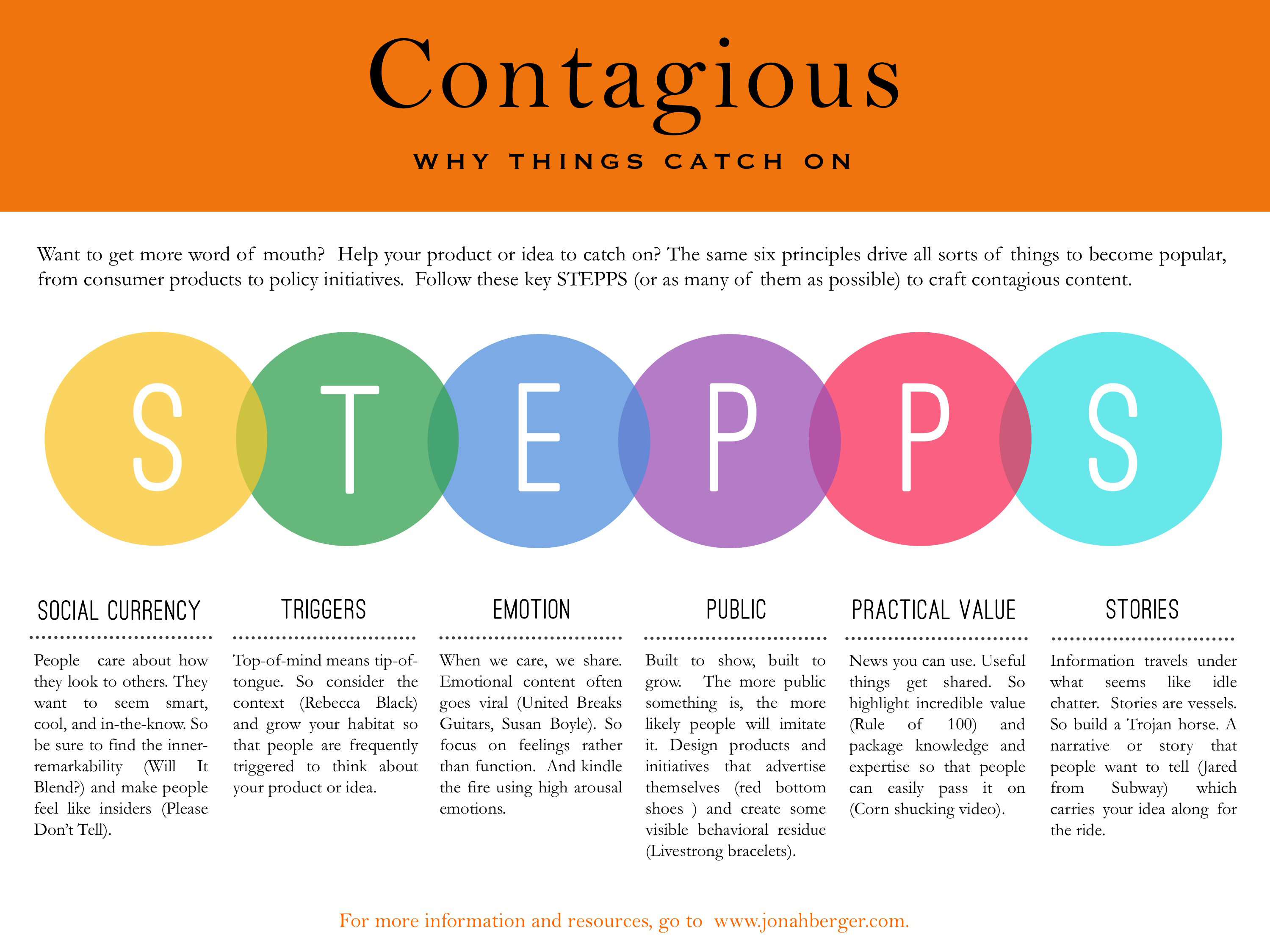
Emotions? This is a principle that has been taken from an approach by Jonah Bergers. Jonah Bergers is an author of the book ‘Contagious’ which explores on why ideas spread and the concept of word of mouth. He proposes that there are 6 principles (also known was the STEPPS Approach) that can be used on their own or in conjunction to have a successful campaign and spread the word around effectively. The ‘Emotions’ principle talks about where the level of arousal that a message triggers, it affects on the sharing aspect. Indicating that the higher the arousal: positive or negative, it is more likely to be shared.

IKEA’s campaign such a viral campaign as they triggered an amusement and humorous reaction which lead to the audience in wanting the share about the ‘ridiculous yet funny’ advertisement to everyone. IKEA created such a stand out advertisement that not only created laughter and enjoyment but it actually aligned with the brand itself.

Ultimately, I can see why IKEA’s marketing campaign ad was one of the best marketing campaigns in 2018 due to the use of the emotion principle of the approach. It makes me wonder what kind of marketing campaigns IKEA will release and will they cause the same effect and reactions as this particular one?

What are your thoughts of IKEA using through this approach? Do you think IKEA’s idea would’ve been spread virally if they had utilised a different approach to their campaign?

Leave any comments down below and I’d love to hear what you think about this topic!